
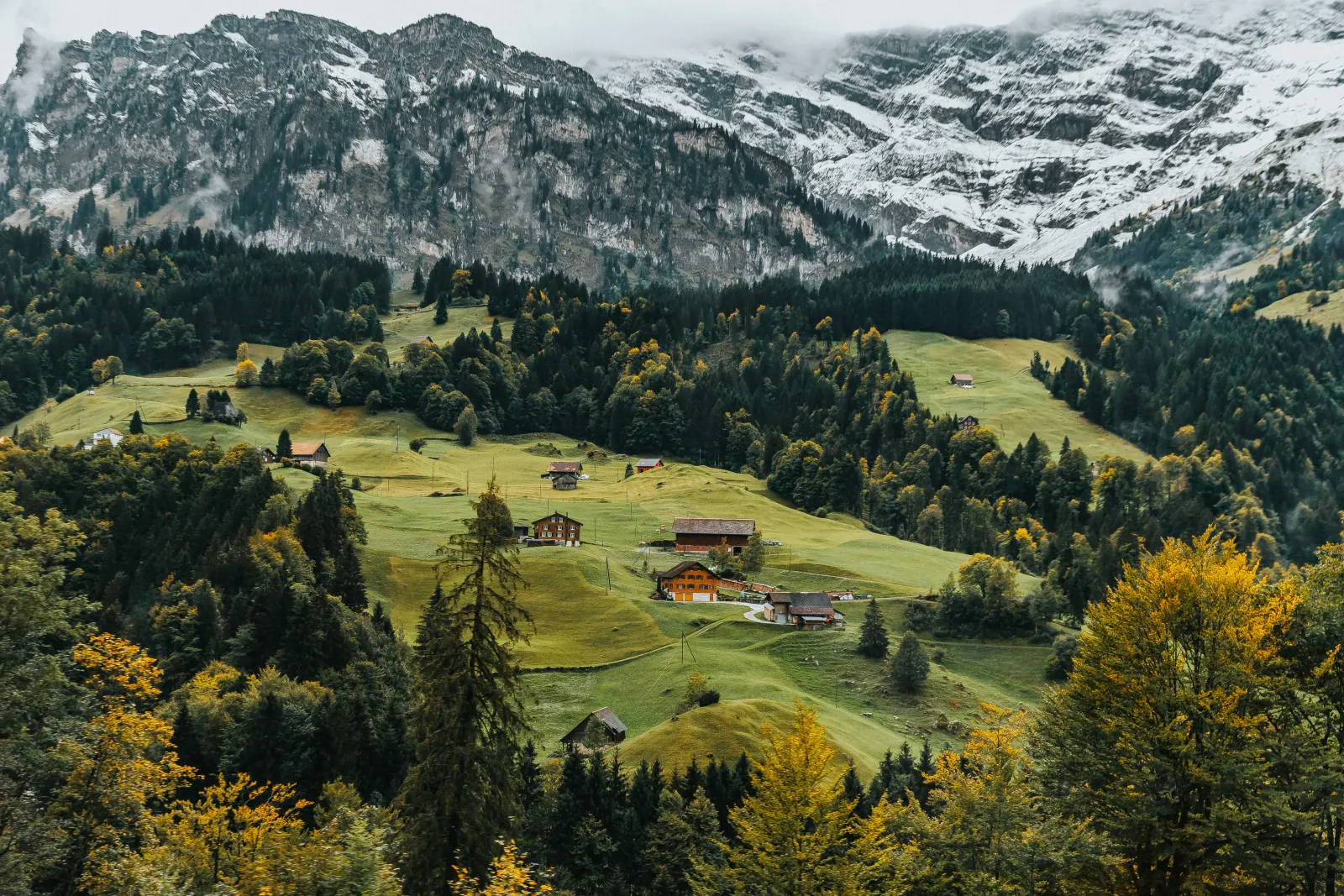
Switzerland offers an excellent habitat for truffles. The species predominantly found here are the summer and Burgundy truffles (also known as the autumn truffle, Tuber uncinatum); the Périgord (Tuber melanosporum) appears sporadically at the climate edge in the Geneva basin, the Jura and Ticino. Unlike Germany, every native species may be lawfully hunted under cantonal rules — which is also why an active and growing truffle-hunting community exists here, alongside a small but expanding plantation movement.
The legal situation
Unlike in Germany, truffles in Switzerland are not strictly species-protected at the federal level. Hunting and harvesting are in principle permitted under cantonal rules — with three working caveats:
- Property rights: on private forest or land, the landowner's permission is required. Federal forest follows the cantonal forest law.
- Cantonal regulations: individual cantons (notably Geneva, Vaud, Zürich, St. Gallen, Ticino) have specific ordinances — usually a daily quantity limit per person and restrictions on tools.
- Trüffelschein: most cantons require a permit issued by the cantonal forestry or nature-protection authority. Conditions vary — see the canton-by-canton overview below.
In federal forest the right to forage applies as defined by the relevant cantonal forest law. In most cantons, 1 to 2 kilograms per person per day are permitted — which, with truffles rarely found in such quantities, is hardly a hurdle in practice. Tool restrictions typically prohibit rotary tillers and limit the hunter to a narrow, curved trowel; the rule protects the host trees' surface roots and the surrounding mycorrhiza, and decides yields in the seasons to come.
Where the hunting is
The most productive Swiss truffle areas lie in mixed forests on calcareous soil. Four working regions:
- Lake Geneva region — La Côte, the Jura, parts of the Bernese Jura. Good Burgundy populations, with an established hunting tradition. Canton Vaud's Bonvillars autumn truffle market is the unofficial Swiss trade centre.
- Midlands — from the Ajoie in the north-west, through the Aargau Reuss valley, to canton Zürich's Limmat valley. Summer and Burgundy truffles. The largest area of Swiss truffle habitat by surface, with a wide spread of small populations.
- Ticino — smaller but consistent populations, especially in the southern valleys (Mendrisiotto, lower Maggia valley). Climate is sub-Mediterranean; the only canton with a measurable Périgord population, although still inconsistent year-on-year.
- Grisons Rhine valley — recent finds, mainly Burgundy truffles. The lower Bündner Herrschaft and Domleschg are the working stretches.
Canton by canton
The cantonal frameworks vary in formality. A working summary, drawing on the Schweizerische Trüffelvereinigung's canton-by-canton overview:
- Vaud and Geneva — light-touch frameworks. Trüffelschein available on application; 2 kg daily limit; private-land permission required. The Bonvillars market and a handful of registered hunting circles.
- Zürich and St. Gallen — formal permit application; basic competence test required; 1 kg daily limit. Active hunting clubs in both cantons; training courses through the Schweizerische Trüffelvereinigung.
- Aargau, Bern, Solothurn — moderate frameworks; permit available on application; daily limits set by cantonal forestry ordinance.
- Ticino — low-formality regime. No formal Trüffelschein; cantonal forest law applies. Permission of the landowner remains the binding rule on private land.
- Grisons — emerging framework. The cantonal forestry authority issues permits on application; the discipline is younger than in the western cantons.
The community
Only a few years ago did the first Swiss truffles appear on the plates of fine restaurants in Lausanne, Zürich and Lugano. Since then Switzerland has seen a steadily rising number of truffle hunters. The Schweizerische Trüffelvereinigung (founded 2009) coordinates training, dog instruction, and the Bonvillars market; cantonal hunting clubs operate in Vaud, Zürich, Aargau and Bern. The community is small enough to know each other and large enough to support a working culture.
Some hunters assume that one can quickly earn a great deal of money with this hobby — a massive underestimation of what it takes: a well-trained dog, at least three seasons of field experience, the kind of site knowledge that cannot be picked up on the side, and the discipline to walk woods at dawn through the autumn rain. A successful Swiss hunter counts in years and dogs, not weekends and kilograms.
Anyone hunting truffles seriously in Switzerland counts in years — not weekends.
Truffle dog rather than pig
Hunting today is conducted almost exclusively with trained dogs. The Lagotto Romagnolo is the classical breed and remains the dominant choice in Swiss hunting circles, although Border Collies, mongrels and selected spaniels are also represented. The Schweizerische Trüffelvereinigung runs annual training courses for dogs and handlers; a working hunter typically invests three years and CHF 5,000–15,000 in the animal. More on breed, training and selection of the right animal under Truffle dog / pig.
The plantation alternative
Alongside wild hunting, Swiss truffle production now includes a small but growing plantation movement. Inoculated oak and hazel seedlings are available from certified Italian and French nurseries; Agroscope (the federal agricultural research institute) maintains a list of registered suppliers and offers extension services. A 1-hectare Périgord or Burgundy plantation in the Swiss midlands costs CHF 15,000–25,000 to establish, with first harvests in years 8–15. More on the technique under Truffle cultivation.
Frequently asked questions
Is truffle hunting legal in Switzerland?
Which truffles grow in Switzerland?
Where can I hunt for truffles in Switzerland?
Do I need a permit?
How much can I harvest per day?
Why is hunting permitted in Switzerland but not Germany?
Glossary
- Trüffelschein
- The Swiss cantonal truffle permit. Issued by the cantonal forestry or nature-protection authority; conditions vary by canton.
- Schweizerische Trüffelvereinigung
- Swiss truffle association, founded 2009. Coordinates training, dog instruction, the Bonvillars market and canton-by-canton overview.
- Bonvillars
- Village in canton Vaud that hosts a small autumn truffle market — the closest Swiss equivalent to an Italian or French autumn fair.
- Mittelland
- The Swiss midlands — the broad calcareous plateau between Geneva and St. Gallen. The largest area of Swiss truffle habitat by surface.
- Agroscope
- Swiss federal agricultural research institute. Maintains a registered nursery list and offers trufficulture extension services.
Sources
- Schweizerische Trüffelvereinigung — canton-by-canton overview, training events, Bonvillars market.
- Cantonal forest laws — Vaud, Geneva, Zürich, St. Gallen, Aargau, Bern, Ticino, Grisons (current consolidated texts).
- Agroscope, Swiss Confederation — trufficulture extension and registered nursery list.
- Hall, I. R., Brown, G. T. and Zambonelli, A. (2007). Taming the Truffle. Timber Press, Portland — chapter on Central European cultivation.
- Bundesamt für Umwelt (BAFU) — federal environment office; species protection framework at the federal level.