Are pigs or dogs still used for truffle hunting in France and Italy today? The short answer: almost exclusively dogs. Pigs are biologically even better suited to the search — but they have a drawback that makes them unusable in professional work, and Italy formalised the change in 1985. The article below covers the pig-to-dog transition, the rise of the Lagotto Romagnolo, and the working anatomy of a modern truffle hunt.
The pig problem
Pigs are biologically perfect for the work. Sows respond instinctively to the truffle's scent, because the truffle aroma compound androstenone resembles the sex pheromone of a boar — the same compound that makes a sow respond to a male during mating season. In France and Italy truffle hunters worked with pigs for centuries, with skilled handlers and well-trained sows producing reliable yields. The problem was structural and insoluble: the pig wanted the truffle for itself.
A grown sow can be prevented only with effort from devouring the find on the spot. Restraining the animal costs strength, sometimes injuries (an angry sow weighing 200 kg is a serious adversary), often the truffle. The pig also tends to root vigorously around the find, damaging the host tree's surface roots and the surrounding mycorrhiza — costs that fall on the hunter in the next seasons. By the late twentieth century the calculation had become unanswerable: a dog finds, sits, waits, and does not damage. Italy banned the use of pigs for truffle hunting in 1985 to protect mycorrhizal sites; France retained the formal possibility but the practice has effectively died out. Pigs appear today only in postcard photographs.
The rise of the Lagotto Romagnolo
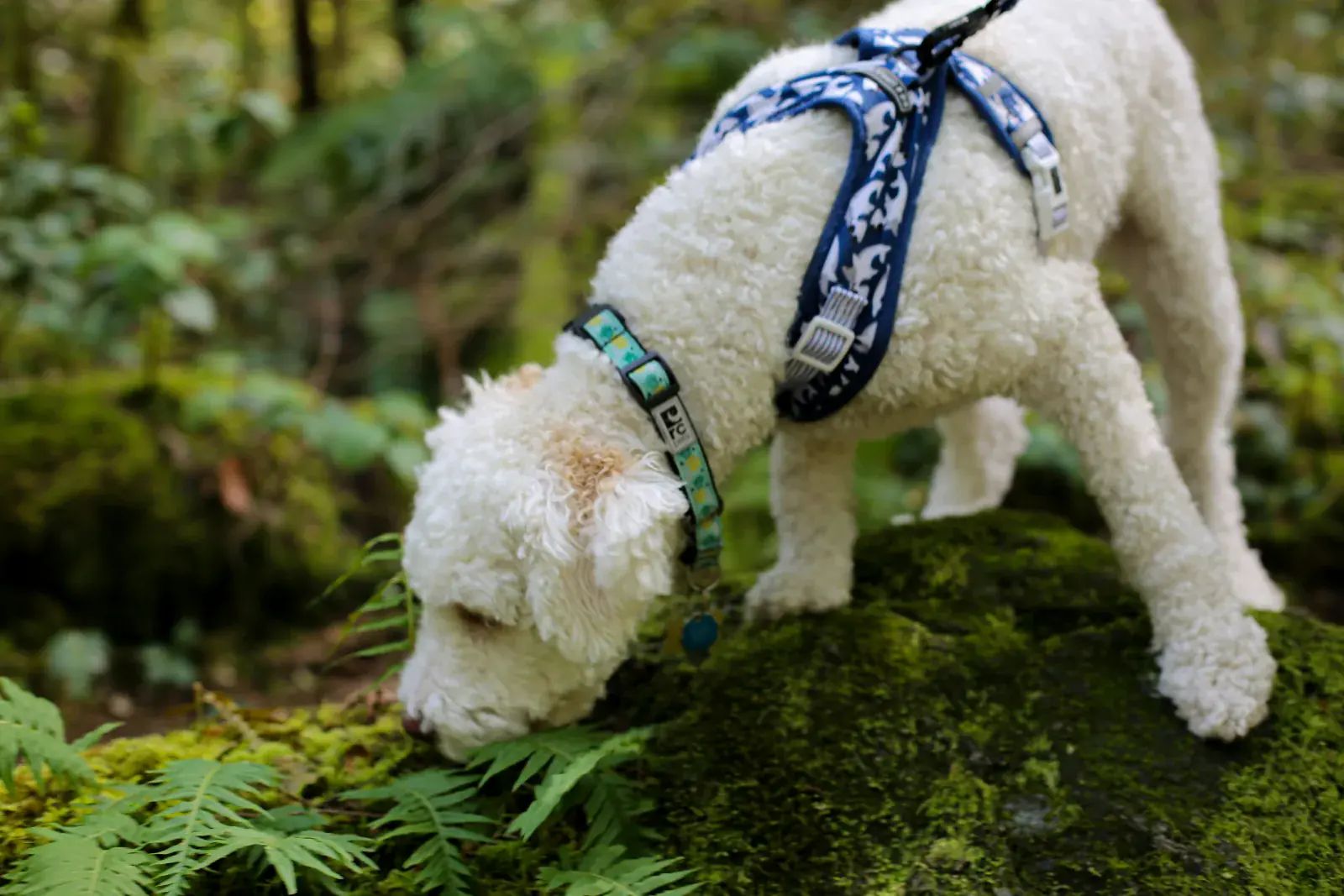
Dogs of the Lagotto Romagnolo breed are the classic truffle hounds. The name means simply "lake dog of Romagna" — the breed originated as a duck-water-retrieval dog in the marshes of the Po delta. As the marshes were drained in the nineteenth century the breed lost its original purpose and was redeployed by truffle hunters in Romagna and the Marche, who selected aggressively for nose, work-readiness and patience. The Lagotto is the only breed officially recognised by the Italian Federation of Truffle Associations as a truffle dog (FCI standard 298, Italian breed origin officially recognised in 1991).
The advantages are unmistakable: an unsurpassed sense of smell among working dogs, high work-readiness, strong bond with the handler, the right size (35–55 cm at the shoulder) to work in dense undergrowth, a curly water-dog coat that handles wet undergrowth without matting, and a temperament that combines persistence with discipline. A well-trained Lagotto in Italy costs CHF 5,000 to 15,000; top dogs with proven hunting parents and several seasons' working experience go above CHF 20,000. An untrained Lagotto puppy starts around CHF 2,500 — the training and the first three seasons are then the buyer's investment.
Other suitable breeds
In theory, almost any motivated dog can be trained to truffle hunting. In practice, the following breeds work alongside the Lagotto: border collies (excellent nose and work-readiness, slightly less patience), poodles (especially standard poodles; intelligent, scent-driven, hypoallergenic), smaller spaniel breeds (cocker spaniel, English springer spaniel; high motivation, good ground coverage), and selected mongrels (often the rural Italian and French standard, bred informally from working stock). What matters in the individual dog is nose, work motivation, handler bond and a willingness to keep working through fatigue.
A hunt, anatomically
An experienced truffle hunt lasts three to five hours, begins before sunrise (the cool morning air carries scent better than the warmer day), and follows no plan a human would understand. The dog ranges widely on a long lead or unleashed, follows scent across several trees, suddenly stops, scratches the surface — and the hunter digs with a narrow, curved spade exactly where the dog has paused. Not deeper than necessary, not wider than the truffle. Trained dogs work so precisely that the host tree's roots remain undamaged, a detail that decides yields in the seasons to come.
The reward sequence matters. The dog finds, sits, waits. The hunter retrieves the truffle, fills the hole carefully, and rewards the dog with a small piece of bread, cheese, or a favourite toy — never with the truffle itself, which the dog must associate with handler approval rather than with consumption. A productive morning on a working plantation yields 100–500 g of fresh truffle; many mornings yield nothing. The hunter does not press; the dog has had its work, and tomorrow is another scent.
A good truffle dog is not a means to an end. The dog is the actual professional — the human only carries the spade.
Training in brief
- Puppy phase (months 2–6) — playful introduction to truffle scent. Truffle-oil-water on toys, scent games in the house and garden, basic obedience. The puppy learns that the smell carries reward.
- Year 1 — finding buried training truffles. Small fresh or frozen truffles wrapped and buried at increasing depths in a controlled garden, located by the dog and rewarded with food or play. The dog learns the find-sit-wait sequence.
- Year 2 — first real seasons in the woods, accompanied by an experienced dog as teacher. The young dog learns range, terrain reading, weather instinct and the working pace. Most of the truffles are still found by the older dog; the young dog observes and confirms.
- Year 3 onwards — independent work. The dog becomes a fully fledged hunter. By year five it should be the more productive of any pair.
The handler's side
A dog needs a handler who can read it. The signs of a find — the abrupt stop, the head drop, the careful scratch — are not ostentatious; the hunter must be watching. The signs of fatigue or distraction are equally subtle. A handler who pushes too hard ruins the contract; a handler who is inattentive misses the finds. The relationship is built over seasons rather than weeks, and the best truffle dogs in Italy work with a single handler for their entire working lives.
Frequently asked questions
Are pigs still used to hunt truffles?
What breed of dog is best for truffle hunting?
How much does a trained truffle dog cost?
How long does it take to train a truffle dog?
Why is the dog rewarded with bread, not truffle?
How does a truffle hunt work in practice?
Glossary
- Lagotto Romagnolo
- The Italian water-dog breed of the Po delta marshes, repurposed as a truffle dog in the nineteenth century. The only breed officially recognised by the Italian Federation of Truffle Associations.
- Androstenone
- The aromatic compound shared by truffles and the boar sex pheromone. The biological reason pigs respond to truffle scent — and the historical basis of the pig-truffle partnership.
- Trifulau · Tabui
- Piedmontese dialect for the truffle hunter and his dog. The trade is heritable; many Roero families count three or four generations of trifulau.
- Spade (cavadora)
- The narrow curved spade used to lift the truffle from the soil without damaging surrounding roots. The Italian name is "cavadora" or "vanghetto"; the French name is "couteau".
- Find-sit-wait
- The trained sequence the dog performs at a productive site: locate, indicate by sitting, wait for the handler. The basis of all professional truffle dog work.
Sources
- Federazione Italiana Tartufi (FNATI) — Italian Federation of Truffle Associations; Lagotto Romagnolo breed standards and training guidance.
- FCI Standard 298 — Lagotto Romagnolo breed standard, Fédération Cynologique Internationale.
- Italian Law n. 752 of 1985 — banned the use of pigs for truffle hunting; effective 1985 across Italy.
- Hall, I. R., Brown, G. T. and Zambonelli, A. (2007). Taming the Truffle. Timber Press, Portland — chapter on truffle dogs and hunting practice.
- Pacioni, G. (1990). I tartufi. Mondadori — Italian classic on hunting craft.
- Schweizerische Trüffelvereinigung — Swiss truffle association; dog training courses for Lagotto and other breeds.