
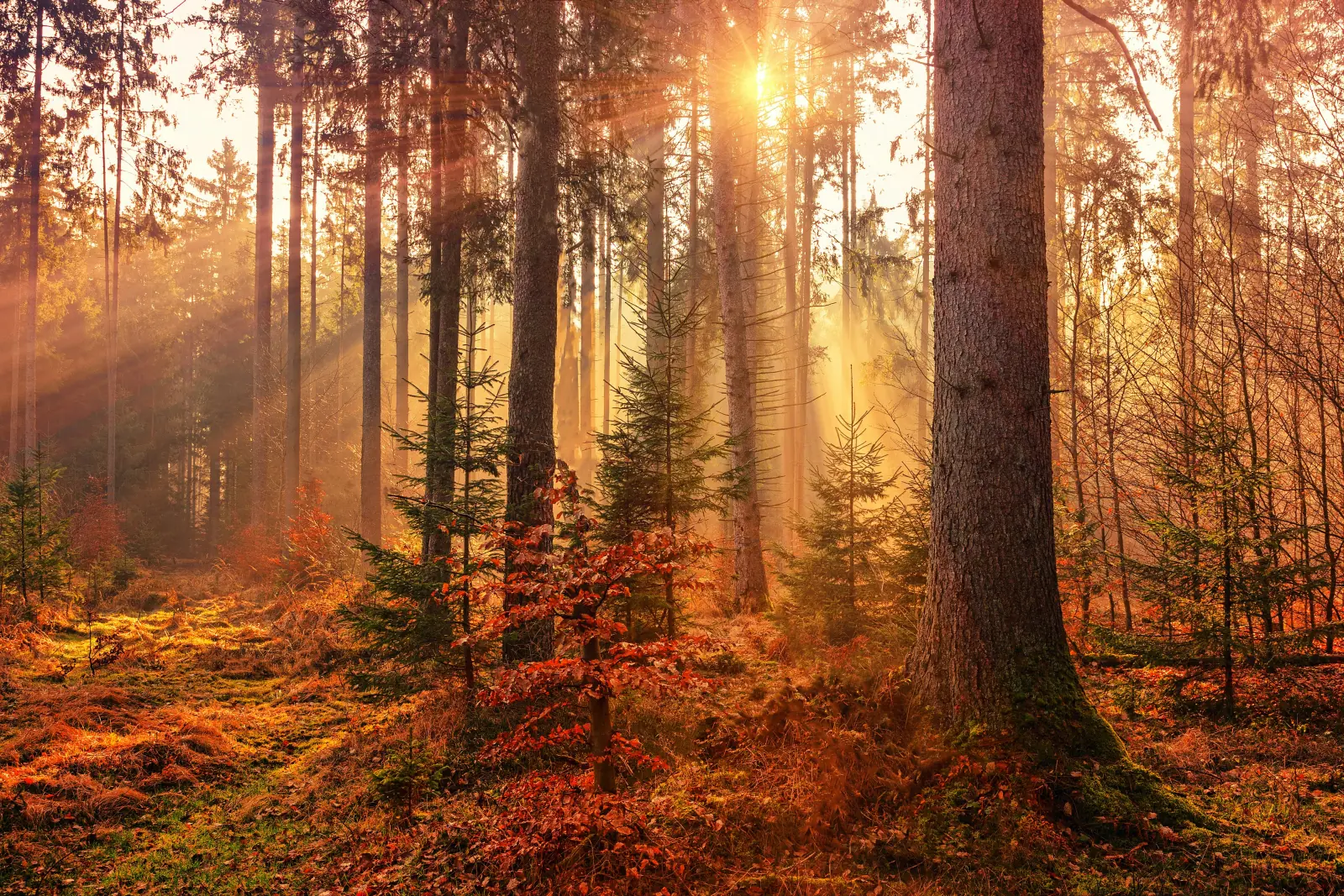
Germany is among the suitable habitats for truffles in central Europe. Summer and Burgundy truffles grow in calcareous mixed woodland from the Swabian Alb to the Saxon limestone areas; Périgord truffles appear sporadically at the southern edge. The legal framework, however, is restrictive: foraging in the wild is prohibited, and the only commercial route is the plantation. The article below covers the species, the regions, the federal protection rules and the working alternative.
The legal situation
Under the Federal Species Protection Ordinance (Bundesartenschutzverordnung, BArtSchV), all native truffle species are classed as specially protected (besonders geschützt). Anyone foraging in the wild and removing truffles is committing an administrative offence (Ordnungswidrigkeit) under federal law; in several Länder (Bavaria, Baden-Württemberg) the offence is treated as criminal under state forestry codes. Penalties range from administrative fines (up to EUR 10,000 in serious cases) to confiscation of equipment and dogs.
Two exceptions apply. Licensed plantations: those who cultivate truffles on owned or leased land may harvest and sell them, with no licence beyond the standard agricultural and forestry permits. Pedagogical or scientific permits: issued by the relevant state nature-protection authority (in Bavaria the Bayerisches Landesamt für Umwelt; equivalent bodies in other Länder), with restrictive conditions on quantity, location and reporting. Recreational hunting in the wild remains forbidden in every federal state.
The species
Two species dominate the German habitat. The summer truffle (Tuber aestivum) is the most widespread, occurring across most of the calcareous belt from May to September. The Burgundy truffle (Tuber uncinatum) is rarer but more aromatic and reaches its German peak from September to January. The Périgord truffle (Tuber melanosporum) appears sporadically at the southern edge — most often in the Kaiserstuhl in Baden-Württemberg — but the German climate is at the limit of its range and yields are inconsistent. The white Alba truffle (Tuber magnatum) does not occur in Germany.
Where truffles grow
German truffle populations are concentrated in five geographical clusters, each with its own working profile.
- Swabian Alb (Baden-Württemberg) — calcareous soils, mild summers, traditional oak forests. The most consistently productive German habitat. Summer and Burgundy populations.
- Franconian Alb and Bavarian Jura (Bavaria) — comparable geological conditions; mature pubescent oak stands. The Bavarian truffle association maintains a register of plantation projects in the region.
- Hessian and Palatine hill country — good Burgundy populations, less summer truffle. The Bergstrasse and the Pfälzerwald edge are the working zones.
- Saxon and Saxony-Anhalt limestone areas — summer and Burgundy truffles in recently surveyed populations; documented from the early 2000s after East German habitat surveys reopened access.
- Kaiserstuhl (Baden-Württemberg) — the only consistent German Périgord habitat, at the southern climate edge. Volcanic-calcareous soil, sub-mediterranean microclimate.
Pedagogical or scientific purposes
A pedagogical or scientific permit allows truffle finding for restricted purposes — research, educational events, scientific surveys. The permit is issued by the relevant state nature-protection authority and requires a defined research or educational objective, a location and timeframe, a quantity limit, and a reporting obligation. The permit does not permit commercial sale of recovered specimens.
For the search, deploy a trained truffle dog — ripe truffles are virtually never visible to the naked eye, since they grow underground. In spring and summer, the truffle fly (Suillia gigantea) can occasionally be a clue: it hovers just above the ground over ripe summer truffles and lays its eggs there. The fly is a useful indicator of ripe specimens when surveying. Even with a fly hovering and a dog indicating, however, digging without a permit is a punishable offence.
Anyone who wants to hunt truffles in Germany has two options: start a plantation — or go to Switzerland.
A plantation as a hobby
A small plantation of one's own is feasible and entirely legal. Eight to twelve inoculated oaks or hazels on a sunny slope with calcareous soil, and a measure of patience — the first harvest comes no earlier than eight, often only twelve to fifteen years later. Costs for a small hobby plantation: EUR 1,500–3,000 for inoculated seedlings (EUR 30–50 each from a certified nursery), preparation, irrigation. Annual maintenance is light. Output, when it comes, can be 1–5 kg per year for a domestic plantation. More on the technique under Truffle cultivation.
A note for plantation owners: harvesting and selling the truffle on owned land is legal, but the registration of the plantation with the state forestry authority is recommended. The Deutsche Trüffelvereinigung (founded 2008) provides plantation consultancy and a voluntary registry.
Cantonal contrast
Across the southern border, Switzerland operates under a different model: truffle hunting is permitted under cantonal permits, with daily quantity limits and species restrictions set at the cantonal level rather than the federal. Many German truffle hunters cross into canton Vaud, canton Zürich or canton St. Gallen for the autumn season, register for a Trüffelschein, and work the woods legally. See Finding truffles in Switzerland for the canton-by-canton picture. France, Italy and Spain operate similar permission-based regimes; Germany is unusual in its blanket federal ban.
Frequently asked questions
Is it legal to hunt truffles in Germany?
Which truffle species grow in Germany?
Where in Germany do truffles grow?
Can I plant my own truffle plantation in Germany?
Why was the German truffle hunt banned?
Glossary
- BArtSchV
- Bundesartenschutzverordnung — the German Federal Species Protection Ordinance. Lists all native truffle species as specially protected; basis of the wild-foraging ban.
- Besonders geschützt
- "Specially protected" — the protection category under BArtSchV that prohibits taking, damaging or trading the species in question.
- Trüffelschein
- The Swiss cantonal truffle permit. Available across the southern border under cantonal rules; not available in Germany.
- Suillia gigantea
- The truffle fly. Hovers above ripe summer truffles in spring and summer and lays its eggs on them. Useful indicator for surveys; does not permit unlicensed digging.
- Deutsche Trüffelvereinigung
- The German truffle association, founded 2008. Plantation consultancy, voluntary registry, training events.
Sources
- Bundesartenschutzverordnung (BArtSchV) — current consolidated text, federal listing of all native Tuber species as specially protected.
- Bayerisches Landesamt für Umwelt — guidance on permits for pedagogical and scientific purposes in Bavaria.
- Hall, I. R., Brown, G. T. and Zambonelli, A. (2007). Taming the Truffle. Timber Press, Portland — chapter on Central European cultivation.
- Deutsche Trüffelvereinigung — plantation consultancy and voluntary registry.
- Stobbe, U. et al. (2013). "Potential and limitations of Burgundy truffle cultivation." Mycorrhiza, 23: 257–268. — German research on uncinatum cultivation.